
Franklin County Property Transfers
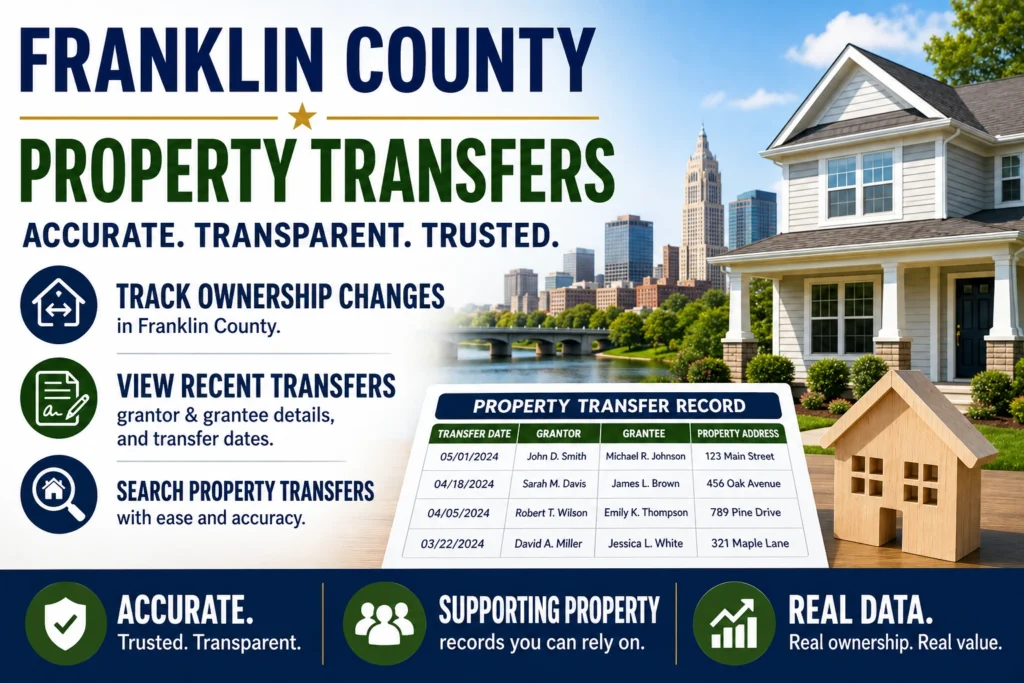
A property transfer is any change in a property’s recorded ownership — which includes sales, but also gifts, estate transfers, and transfers into or out of a trust. To research one, start with property search to find the parcel, then review its transfer or conveyance history. A transfer isn’t automatically the same as a sale, and its date isn’t automatically the same as when a deed was recorded.
What Is a Property Transfer?
A property transfer is a change in who holds ownership interest in a piece of real estate. That’s a broader idea than most people assume: it covers a conventional purchase, but also a gift between family members, a transfer as part of settling an estate, or moving property into or out of a trust. A sale is one specific kind of transfer — one involving a purchase and a sale price. A deed is the legal document that actually carries out or evidences the transfer. Recording is the separate act of filing that deed with the county so the change becomes part of the public record.
Those four ideas — transfer, sale, deed, recording — get used loosely and interchangeably in everyday conversation, but they’re each doing a different job.
What Is a Property Conveyance?
“Conveyance” is the more formal, legal-flavored word for the same underlying concept: the act of transferring an interest in real property from one party to another. In practice, you’ll see “transfer” and “conveyance” used more or less interchangeably across different county systems and documents, alongside related terms like “ownership change” and “deed transfer.” None of these terms carry a dramatically different meaning from the others in everyday use — the variation is mostly about which office or system happens to use which word.
How to Research Franklin County Property Transfers
- Identify the property you’re researching.
- Find its address or parcel number through property search.
- Locate the available transfer or conveyance information on its record.
- Review the transfer date.
- Review the type of transaction or transfer, where indicated.
- Check any deed or recording information provided, such as an instrument or document number.
- Note the parties involved where that information is publicly available.
- Verify anything important against the official Recorder or Auditor record rather than relying on a secondhand summary.
What Information Can a Property Transfer Record Show?
Depending on the record and system, transfer or conveyance information may include:
- Property address and parcel number
- Transfer date and recording date (which aren’t always the same thing — more on that below)
- Grantor (the party transferring ownership) and grantee (the party receiving it)
- Deed type and instrument or document number
- Transfer type
- Consideration or transaction amount, where one applies
- Legal description of the property
- Recording details
Not every field appears on every record, and different systems — the Auditor’s property data versus the Recorder’s actual recorded documents — can expose different pieces of this same underlying information.
Property Transfer History
A property’s transfer history is its accumulated record of ownership changes over time — not just its most recent transaction, but every recorded change going back through the property’s records. Multiple transfers can appear for a single property for all sorts of reasons: repeated resales, a transfer into a trust followed later by a sale out of it, or an inheritance followed eventually by the heir selling the property.
It’s worth carrying the same caution here that applies to sale history generally: a list of transfers is not automatically a list of ordinary home sales. Some of those entries may reflect something other than a market transaction, which is exactly what the next section covers.
Property Transfers vs. Property Sales
This is the distinction most worth getting right. Property transfers is the broader category — any change in recorded ownership. Property sales is a subset of that category — specifically, transfers that involved a purchase and a sale price.
| Property Transfers | Property Sales | |
|---|---|---|
| Scope | Any change in recorded ownership | A transfer that specifically involved a purchase and sale price |
| Includes | Sales, plus gifts, estate transfers, trust transfers, and other ownership changes | A subset of transfers reflecting a market transaction |
| Key question | “Did ownership change, and how?” | “Did this sell, and for how much?” |
A property can be transferred without being sold in a conventional open-market sense at all — common examples include transfers between family members, transfers into or out of a trust, deeds tied to settling an estate, and other transfers where no arm’s-length purchase took place. All of these are transfers; not all of them are sales.
Property Transfers vs. Property Records
Transfers focus specifically on ownership changes — the who-and-when of a property changing hands. Property records are the broader category: ownership, physical characteristics, valuation, and history all together, of which transfer activity is one component. This page goes deep on that one component; the records page covers the fuller picture.
Property Transfers vs. Property Search
Property search is how you find a specific parcel in the first place. Property transfers is what you investigate once you’ve found it — that parcel’s history of ownership changes specifically. Search gets you to the property; this page helps you make sense of how its ownership has moved over time.
Do All Property Transfers Mean a Property Was Sold?
No. Whether a given transfer reflects an actual sale depends on the transaction type, the deed involved, whether a meaningful consideration amount is attached, and the surrounding circumstances. A transfer with no stated consideration, or one between family members or into a trust, generally isn’t a market sale even though it’s still a legitimate recorded transfer. When you’re researching a specific property, it’s worth looking at these details before assuming every entry in its transfer history represents what a buyer actually paid on the open market.
What Is the Difference Between a Transfer Date and a Sale Date?
These can genuinely differ, and it trips people up. A sale date typically refers to when a transaction actually closed. A transfer or recording date refers to when the ownership documentation was filed with the county — which can happen days or even weeks after the underlying transaction, depending on how quickly the paperwork moves through the process. Depending on which system or record you’re looking at, the date shown might reflect either one, so if timing matters for what you’re researching, it’s worth confirming which specific date you’re actually looking at.
How Deeds Relate to Property Transfers
A deed is the legal document that carries out or evidences a property transfer. Franklin County recognizes several deed types — including general warranty, special warranty, and quitclaim deeds — which carry different legal implications for what’s actually being guaranteed about the title. Once a deed is properly recorded, it becomes part of the public record.
One genuinely useful procedural detail: in Franklin County, a deed transferring real property generally needs to go through the Auditor’s Office first — where it’s reviewed and stamped to confirm the transfer complies with Ohio law and any applicable conveyance fee is handled — before it’s recorded with the Recorder’s Office, which is the office that actually maintains deeds, mortgages, and other real property instruments long-term. The standard form used for this is the state’s Real Property Conveyance form (DTE Form 100).
This page can explain the general shape of that process, but it isn’t a substitute for legal advice — for anything involving how a specific deed affects your ownership or title, a real estate attorney or title professional is the right resource.
How to Verify a Property Transfer
Before relying on transfer information, check:
- Does the property address and parcel number match?
- What’s the actual transfer or recording date?
- Who are the grantor and grantee?
- What deed or instrument number is associated with it?
- Does the legal description match the property you’re researching?
- Have you confirmed this against the official Recorder or Auditor record, rather than a secondhand summary?
Why Property Transfer Information Can Be Useful
People research transfer history for legitimate reasons: understanding a property’s ownership history before a purchase, researching a property more broadly as part of due diligence, reviewing historical conveyances for a title or research project, or simply understanding the chronology of a property they’re interested in. As with any public record, it’s worth using this information responsibly and in service of genuine property research rather than for purposes unrelated to the property itself.
Frequently Asked Questions
What is a property transfer?
A change in a property’s recorded ownership — which includes sales, but also gifts, estate transfers, and trust transfers, among other ownership changes.
What is a property conveyance?
Essentially the same concept as a transfer, described in more formal legal language — the act of transferring an interest in real property from one party to another.
How do I find Franklin County property transfers?
Search for the property, then review its transfer or conveyance history, which shows recorded ownership changes over time.
How can I see a property’s transfer history?
A property’s record generally includes all recorded past transfers, not just the most recent one — look for a transfer or conveyance history section.
Is a property transfer the same as a sale?
Not necessarily. A sale is a transfer that involved a purchase and sale price; transfers also include gifts, estate transfers, and other ownership changes with no sale price attached.
What is the difference between a deed and a property transfer?
A transfer is the change in ownership itself. A deed is the legal document that carries out or evidences that change, and becomes part of the public record once recorded.
What information can a transfer record show?
Typically the transfer or recording date, grantor and grantee, deed type and instrument number, and sometimes a consideration amount and legal description — though not every field appears on every record.
Does every property transfer mean the property was sold?
No. Transfers between family members, into or out of a trust, or tied to an estate often don’t involve a market sale, even though they’re still legitimate recorded transfers.
What is a transfer date?
It generally refers to when ownership changed or was recorded, which can differ from the date an underlying sale transaction actually closed.
How can I verify a property transfer?
Cross-check the grantor, grantee, dates, and instrument number against the official Recorder or Auditor record, especially for anything with legal or financial significance.
Search a Property
Franklin County Property Guide explains how property transfers and conveyances generally work, but it doesn’t record deeds or maintain the official transfer record.
Search a Franklin County property → to find a specific parcel’s transfer history.
For official deed and conveyance records, visit the Franklin County Recorder’s Office. For property-level transfer data alongside valuation and ownership, visit property.franklincountyauditor.com, maintained by the Franklin County Auditor’s Office.