Franklin County (Ohio) Property Taxes
(Check Your Property Taxes)
If you own property in Franklin County, your annual tax bill is the product of a system with more moving parts than most people realize: not just your property’s value, but a specific combination of overlapping tax districts, voter-approved levies, and any exemptions or credits that apply to you. That’s why two similarly valued homes a few miles apart can owe noticeably different amounts.
This page walks through how the system fits together, what typically changes a bill from year to year, and how to read and verify one.
How Franklin County Property Taxes Work
Property tax starts with valuation. The Auditor’s Office assigns each parcel an appraised value, a portion of which — assessed or taxable value — becomes the actual base that tax rates are applied to. From there, a combined tax rate specific to that property’s location, expressed in mills, is applied to generate the tax obligation.
That combined rate isn’t one countywide number. It’s built from every overlapping taxing jurisdiction where the property sits — typically a school district, a city or township, the county itself, a library district, and any other local levies voters have approved over the years. That stacking of jurisdictions is the main reason tax burdens vary so much by location, even among similarly valued homes.
How Are Franklin County Property Taxes Calculated?
At a conceptual level, a property’s tax obligation comes from its taxable value multiplied by its applicable combined tax rate, then adjusted for any exemptions or credits the owner qualifies for. Each of those pieces can vary independently — taxable value shifts with reassessment cycles, rates shift with new or expiring levies, and available credits depend on individual eligibility.
Because rates and levies differ by taxing district and change over time as voters approve or renew them, there’s no single figure that represents “the” Franklin County property tax rate. Current rates and levy details are set and published by the county, and are the kind of thing worth confirming directly rather than assuming from a prior year or a different neighborhood.
What Is Taxable Value?
Taxable value is the portion of a property’s appraised value that tax rates are actually applied to — in Ohio, a defined 35% fraction of appraised value, sometimes further reduced by exemptions or credits. It’s a different number from market value (what a property might sell for) and appraised value (the Auditor’s estimate of that market value). For a fuller explanation of how these figures relate, see Franklin County property values.
What Are Property Tax Rates and Levies?
Tax rates in Ohio are expressed in mills, with each mill representing a small fraction of a property’s taxable value. A property’s total rate is the sum of every taxing jurisdiction’s rate that applies to its specific location — county, school district, municipality or township, library, and any special districts.
Levies are additional tax rates that voters approve for a specific purpose, like school funding or a fire district, and they’re a major reason two nearby properties can have different total rates if they fall in different school or service districts. Because levies get added, renewed, or allowed to expire over time, a district’s combined rate can shift from one tax year to the next even without any change in property values.
Why Did My Franklin County Property Taxes Increase?
A tax bill can go up for several distinct reasons, including:
- A higher assessed value following a reassessment or triennial update
- A new levy passed by voters in your taxing district
- Expiration of a previous credit or exemption
- Changes to your property’s characteristics, like a completed addition
- Adjustments to which taxing jurisdictions apply to your property
It’s worth understanding that a rise in property value doesn’t automatically produce the same percentage increase in your tax bill. Ohio law includes mechanisms that limit how much revenue most existing voted levies can collect even as values rise, which is why effective rates often move in the opposite direction of values on those particular levies — though newly passed levies aren’t subject to that same limit. Because every bill reflects an individual mix of value, district, and levy history, there’s no way to diagnose a specific increase without looking at that specific property’s actual tax record.
How to Find Franklin County Property Tax Information
To research tax information tied to a specific property:
- Identify the property you’re interested in.
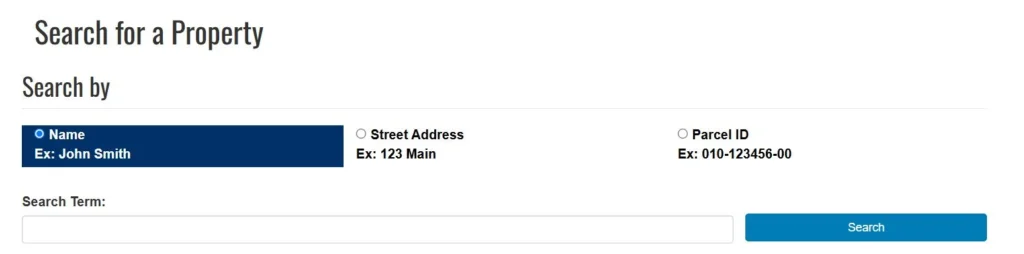
- Use the Franklin County property search to locate its record.
- Review the available tax-related fields, including taxable value and tax district.
- Cross-reference the applicable rates and levies for that district.
- Verify anything current or bill-specific through the appropriate official source, since online records can lag slightly behind the county’s most recent data.
How to Read a Franklin County Property Tax Bill
Tax bill formats can vary and change over time, but most contain a similar set of core elements:
- Parcel identifier — the property the bill applies to
- Assessed or taxable value — the base the tax is calculated from
- Applicable rate — the combined mill rate for that property’s taxing district
- Levies — the voter-approved components making up part of that rate
- Credits and exemptions — any reductions applied, such as the Homestead Exemption
- Total amount due — the resulting tax obligation
- Payment or installment information — Ohio counties commonly bill property tax in two installments per year, though exact due dates vary by year and should be confirmed with the current bill or the Treasurer’s Office rather than assumed
If anything on an actual bill doesn’t match what’s described here, that’s a sign the format has been updated — always defer to the current bill and official source over a general description like this one.
Franklin County Property Taxes and Property Values
Value and tax are related but distinct. Property value — market, appraised, assessed, or taxable — describes what a property is worth or how much of that worth counts toward tax. Property tax is the dollar amount actually owed, which depends on that value along with rates, levies, exemptions, and credits. A property’s value can change without its tax bill changing by the same amount, and vice versa, since rates and levies move independently of valuation.
Property Tax Exemptions and Credits
Certain programs can reduce what a property owner ultimately owes. The most common is the Homestead Exemption, available to qualifying senior, disabled, and certain veteran or surviving-spouse homeowners. Other credits, like the Owner Occupancy Credit, apply more broadly to owner-occupied homes regardless of age or income.
Eligibility rules, application requirements, and exact reduction amounts are set by the county and state and can change, so rather than assume you do or don’t qualify, it’s worth checking current requirements directly rather than relying on a general description.
Can Property Taxes Be Challenged?
It depends on what’s actually being disputed. If you believe the underlying property value is wrong, the formal path is a valuation complaint through the Board of Revision, since tax obligations are calculated from that value. If instead you believe there’s an error in the calculation itself — the wrong taxing district applied, or a credit that should be reflected but isn’t — that’s typically a correction request handled directly with the Auditor’s or Treasurer’s office rather than a formal Board of Revision case.
Filing windows, required evidence, and correction procedures are set by the county and can change year to year, so confirm current requirements before assuming a specific process applies to your situation.
How to Check Your Property Tax Information
A quick self-check before you assume something is wrong:
- Confirm the property address and parcel number match
- Review the current assessed and taxable value
- Check which tax district and levies apply to that location
- Confirm any exemptions or credits you expect are actually reflected
- Compare against a prior bill if you have one, to see what specifically changed
- If something still looks off, raise the discrepancy with the appropriate official office rather than guessing at the cause
Frequently Asked Questions
How do I find my Franklin County property taxes?
Search for the property to locate its record, then review the taxable value, tax district, and applicable rates and levies shown there. For your actual bill and payment details, use the official Treasurer resource.
How are Franklin County property taxes calculated?
Taxable value — a set fraction of appraised value — is multiplied by the combined tax rate for that property’s specific taxing district, then adjusted for any exemptions or credits that apply.
Why did my Franklin County property taxes increase?
Common causes include a reassessment raising your value, a new voter-approved levy, an expired credit, or property changes like a completed addition. Ohio law limits how much revenue most existing levies can collect as values rise, so an increase isn’t always proportional to a value change.
What is taxable value?
It’s the portion of appraised value — set by Ohio law at 35% — that tax rates are actually applied to, before any exemptions or credits are factored in.
Are property value and property tax the same thing?
No. Value describes what a property is worth or how much of that worth is taxable; tax is the actual dollar amount owed once rates, levies, and credits are applied to that value.
Where can I find a Franklin County property tax bill?
Through the official Treasurer’s Office resource, which issues and manages bills and payments. This guide explains how the system works but doesn’t hold or issue bills itself.
What affects my Franklin County property tax rate?
Your specific combination of taxing jurisdictions — school district, municipality or township, county, library, and any special levies — determines your combined rate, which is why it varies by location.
Do all Franklin County properties have the same tax rate?
No. Rates depend on which taxing districts and levies apply to a specific location, so they vary across the county.
Can a property tax exemption reduce my tax bill?
Yes, programs like the Homestead Exemption and Owner Occupancy Credit can reduce the taxable amount for qualifying owners. Eligibility and amounts are set by the county and state.
How can I check whether my property tax information is correct?
Compare your property’s value, tax district, and applied exemptions against what you expect, and against a prior bill if available. Report anything that looks wrong to the appropriate official office.
Where can I verify current Franklin County property tax information?
Through the official Franklin County Auditor and Treasurer systems, which are the authoritative sources for current rates, levies, values, and bills.
Verifying Official Tax Information
Franklin County Property Guide explains how the property tax system works, but it isn’t a government office and doesn’t set rates, issue bills, or process payments.
For current, official property tax information, visit property.franklincountyauditor.com for valuation and parcel data, maintained by the Franklin County Auditor’s Office.